ARTICLE
Waikiki Friday fireworks cruise guide
Planning Oahu and Big Island activities? Learn why Hawaii's only reliable year-round manta ray night snorkel occurs along Kona's coastline, plus tour details.
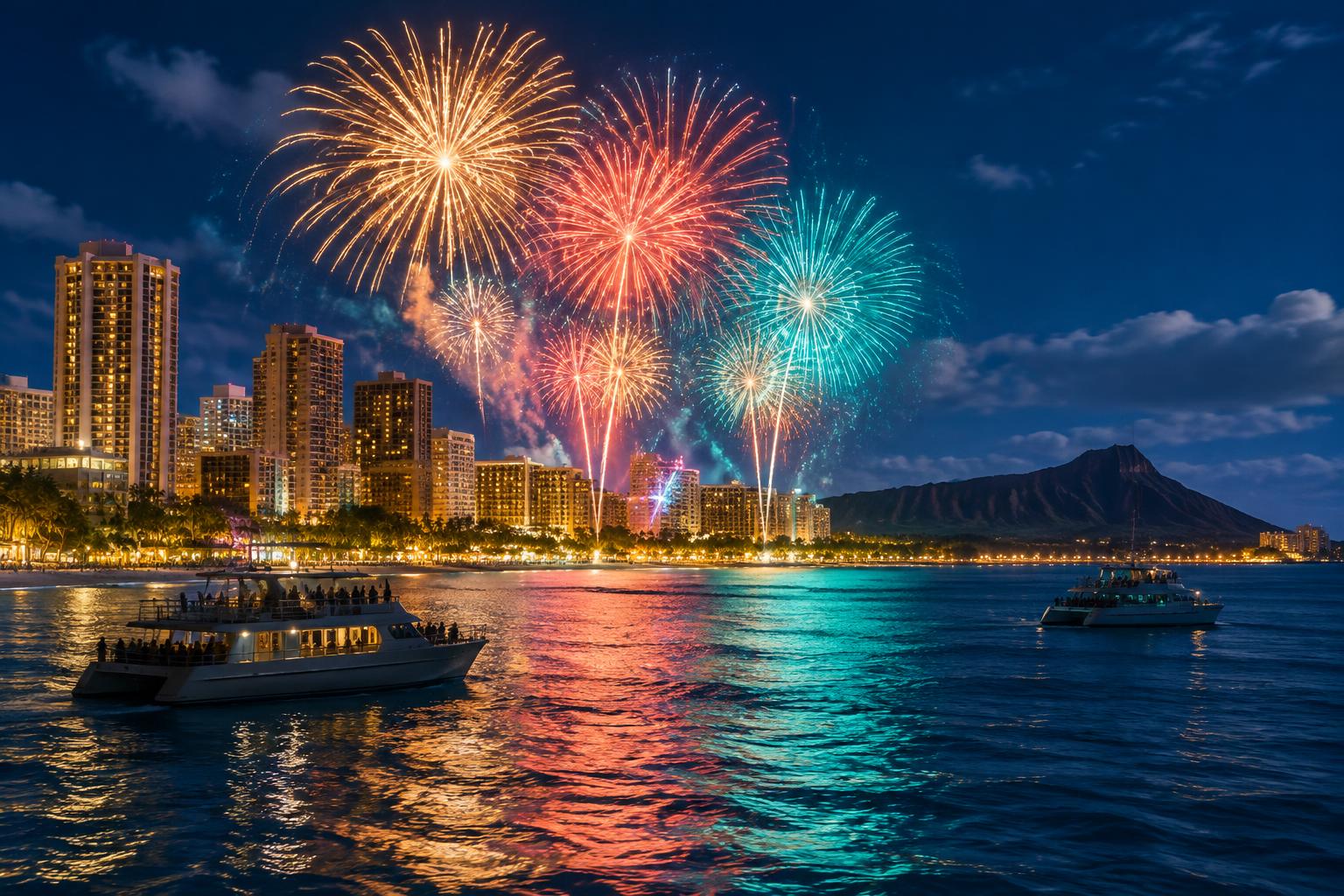
AI-generated illustration; not a photograph of a specific cruise.
Quick facts
- Species
- Reef manta mobula alfredi
- Wingspan Ft Range
- 8 – 16
- Feeding Behavior
- Plankton filter feeding
- Best Island
- Big island kona coast
- Boat Ride
- ~20–30 min from harbor to the site (as little as ~5 min from Keauhou)
- Departure Harbors
- Keauhou Harbor (south) or Honokohau/Kealakehe (north)
While Oahu offers coastal evening cruises, Hawaii's only reliable year-round manta ray night snorkel takes place exclusively along the Big Island's Kona coast.
Ocean currents drift under the dark Pacific night as illumination spreads across the water surface. For visitors coordinating island travel across Hawaii, understanding location-specific activities ensures realistic trip planning.
Global Manta Ray Biology and Regional Location
Although Oahu features evening scenic boat excursions, the Big Island's Kona coast is the only reliable year-round location in Hawaii for a manta ray night snorkel. The resident Hawaiian species is the reef manta (Mobula alfredi), which features an adult wingspan ranging from 8 to 16 feet. These gentle filter feeders eat plankton and are naturally drawn to illuminated float platforms deployed after dark. Because daytime sightings are rare—as mantas remain in deeper water or visit offshore cleaning stations during daylight—nighttime lighting creates the necessary environment for feeding observations. Visitors interested in reserving an excursion can explore available Kona night snorkel tours.
Tour Logistics and Preparation
Kona night snorkel excursions depart from two primary locations: Keauhou Harbor in the south and Honokohau (Kealakehe) Harbor in the north. Transit by boat to the viewing site typically takes 20 to 30 minutes, though departures from Keauhou can reach the site in as little as 3 to 5 minutes. Because these trips are extremely popular, advance booking is strongly recommended.
Participants are advised to bring a towel, a warm dry layer for the return trip, reef-safe sunscreen, and motion-sickness medication if needed. Standard gear—including a wetsuit, mask, snorkel, and lighted float board—is provided on site. Minimum age requirements commonly range between 5 and 6 years old, and operators often require a basic 25-yard swim capability. During humpback whale season from December through March, daytime whale watching makes an excellent pairing before an evening snorkel.
Coastal Conditions and In-Water Format
Manta night snorkels run year-round along the Kona coast, with peak activity occurring from May through October when warmer waters and higher plankton concentrations draw active feeders. Water temperatures generally stay between 75°F and 82°F.
No certification is required for these excursions, as all viewing is conducted as a night snorkel while holding onto a lit surface float board. Standard in-water viewing time ranges from 20 to 45 minutes, with full in-water sessions lasting up to 60 minutes depending on conditions. The total tour duration usually spans 1.5 to 3 hours from harbor departure to return.
Operator Policies and Marine Safety
Reef mantas are entirely harmless to humans, possessing no stingers or barbs. Guests must remain flat at the surface, hold onto the float board, and refrain from touching the animals. Personal cameras and GoPros are permitted, but camera flashes are strictly prohibited to avoid disorienting the marine life. Snorkelers are frequently instructed to swim without fins so they do not accidentally kick the mantas.
Pricing for entry-level tours starts from around $99+ per person. Minimum group sizes of 4 to 6 guests are often required for a boat to depart. Cancellation windows vary by operator, ranging from 24 hours, 48 hours, 72 hours, or up to a week for larger parties. Most operators offer a standard Manta Guarantee: if no mantas are sighted during your excursion, you may rebook or return on another night for free, though cash refunds are generally not provided. To view specific viewing sites like Manta Village, check location details prior to booking.
Frequently Asked Questions
Where do manta ray night snorkels take place in Hawaii?
Manta ray night snorkels take place exclusively on the Big Island's Kona coast, which is the only reliable year-round location in Hawaii for this activity.
Do I need certification to participate in a night snorkel?
No certification is required. The experience is conducted entirely as a night snorkel where participants float at the surface while holding onto an illuminated board.
Are manta rays dangerous to swim with?
Manta rays are completely harmless. They have no stingers or barbs, though snorkelers must stay flat on the surface board and never touch the animals.
What equipment should I bring on a manta night snorkel?
Operators provide wetsuits, masks, snorkels, and lighted float boards. Guests should bring a towel, a warm dry layer for after the swim, reef-safe sunscreen, and motion-sickness medication.
What happens if no manta rays appear during the tour?
Most operators offer a Manta Guarantee that allows guests to rebook or join a future trip for free if no mantas are seen, though cash refunds are typically not issued.
Frequently asked
Manta ray night snorkels take place exclusively on the Big Island's Kona coast, which is the only reliable year-round location in Hawaii for this activity.
No certification is required. The experience is conducted entirely as a night snorkel where participants float at the surface while holding onto an illuminated board.
Manta rays are completely harmless. They have no stingers or barbs, though snorkelers must stay flat on the surface board and never touch the animals.
Operators provide wetsuits, masks, snorkels, and lighted float boards. Guests should bring a towel, a warm dry layer for after the swim, reef-safe sunscreen, and motion-sickness medication.
Most operators offer a Manta Guarantee that allows guests to rebook or join a future trip for free if no mantas are seen, though cash refunds are typically not issued.